The Ultimate Camino Packing List
The refined gear list from five Caminos — every item justified
The Camino Packing Philosophy
Within the first week of my Camino, I was desperately hunting for post offices at the end of each walking day. My shoulders ached, my hips were bruised from an ill-fitting pack, and every step was a reminder of my overpacking mistakes. By the time I arrived in most towns, the post offices were already closed, but I got lucky shortly after Logroño when I reached one just in time. I shed what felt like half my bodyweight sending “just-in-case” items home that hadn’t seen daylight since I started walking. My suddenly spacious backpack felt like a different beast entirely, and the relief was immediate—every step lighter, every kilometer easier.
This lesson—learned the hard way through blisters and shoulder pain—is one nearly every pilgrim discovers. After walking over 1,000 km across various Camino routes, I’ve refined my packing strategy down to what truly matters. This isn’t just another theoretical list created by someone who hasn’t felt the reality of carrying everything they own for weeks on end. It’s exactly what goes in my backpack, proven through rain, heat, mountains, and meseta.
Before diving into specific items, let’s establish a few core principles that guide every packing decision:
-
Weight is your enemy – Every unnecessary gram becomes a burden multiplied by hundreds of thousands of steps
-
Quick-dry fabrics are non-negotiable – When you get a chance to wash clothes, you need them to dry quickly
-
Versatility trumps quantity – Each item should serve multiple purposes or conditions
-
Comfort is worth the weight – Some items justify their weight through the comfort they provide
-
The Camino provides – You’re walking through civilization with shops, pharmacies, and services—not the wilderness
Quick Takeaways: What Really Matters
If you’re just skimming this article, here are the key principles I’ve learned after more than 1,000 km on the Camino:
-
Pack Weight: Aim for no more than 10% of your body weight—your knees will thank you
-
Clothing Strategy: Focus on quick-dry, odor-resistant fabrics that can be worn multiple days
-
Footwear: Well-broken-in trail runners or hiking shoes + recovery footwear
-
Laundry Reality: Don’t expect daily washing opportunities—plan accordingly
-
Essentials: Blister care, adequate water, sun protection, and rain gear
-
Adaptability: Pack for versatility across changing conditions
Now, let’s break down exactly what goes into my pack, category by category:
My Complete Camino Packing List
Clothing System
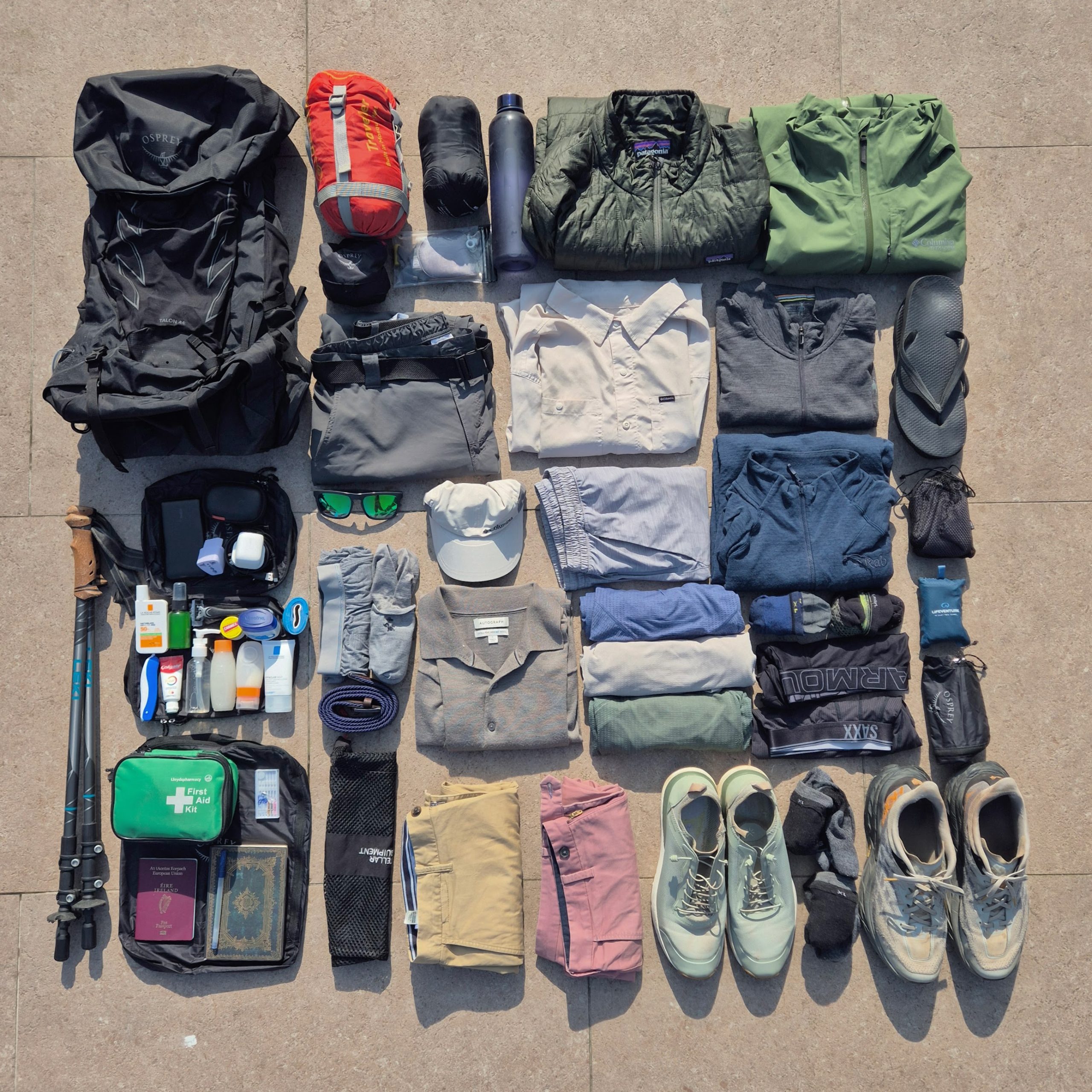
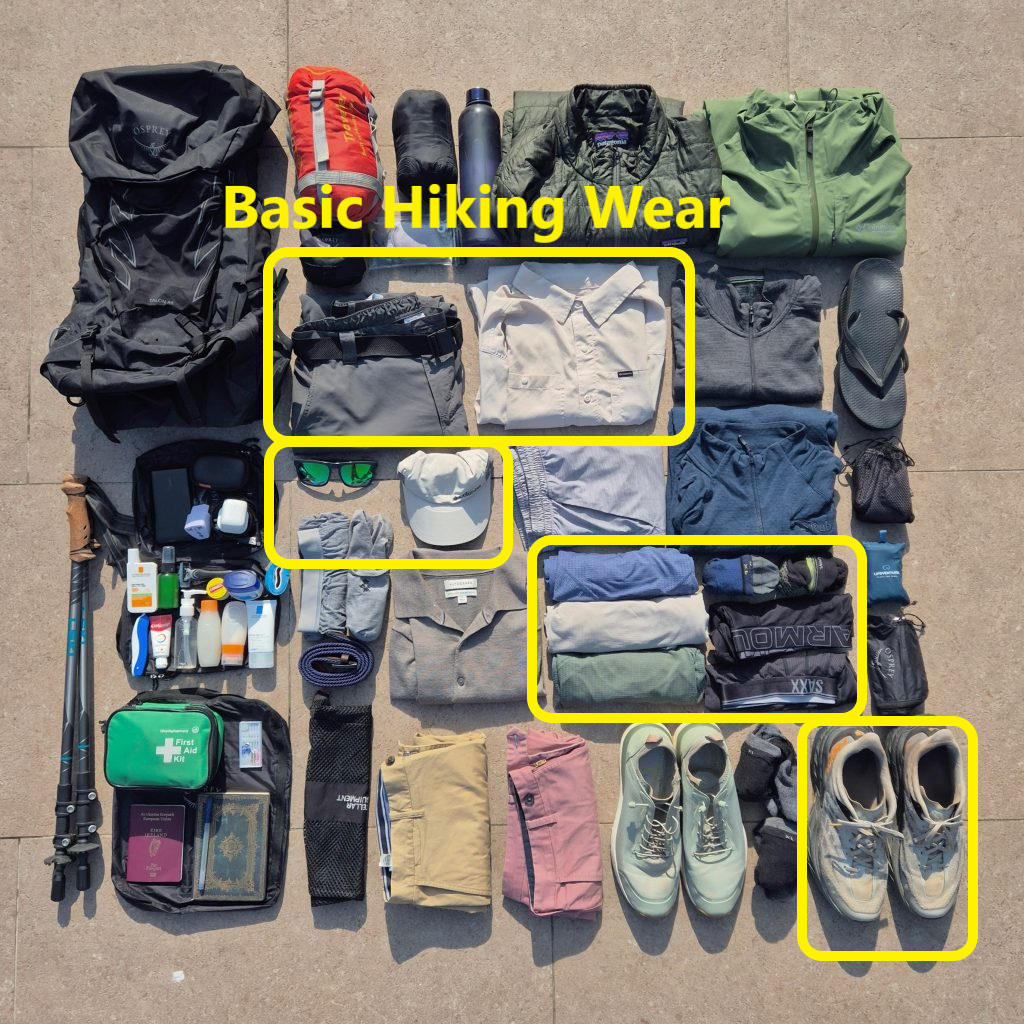
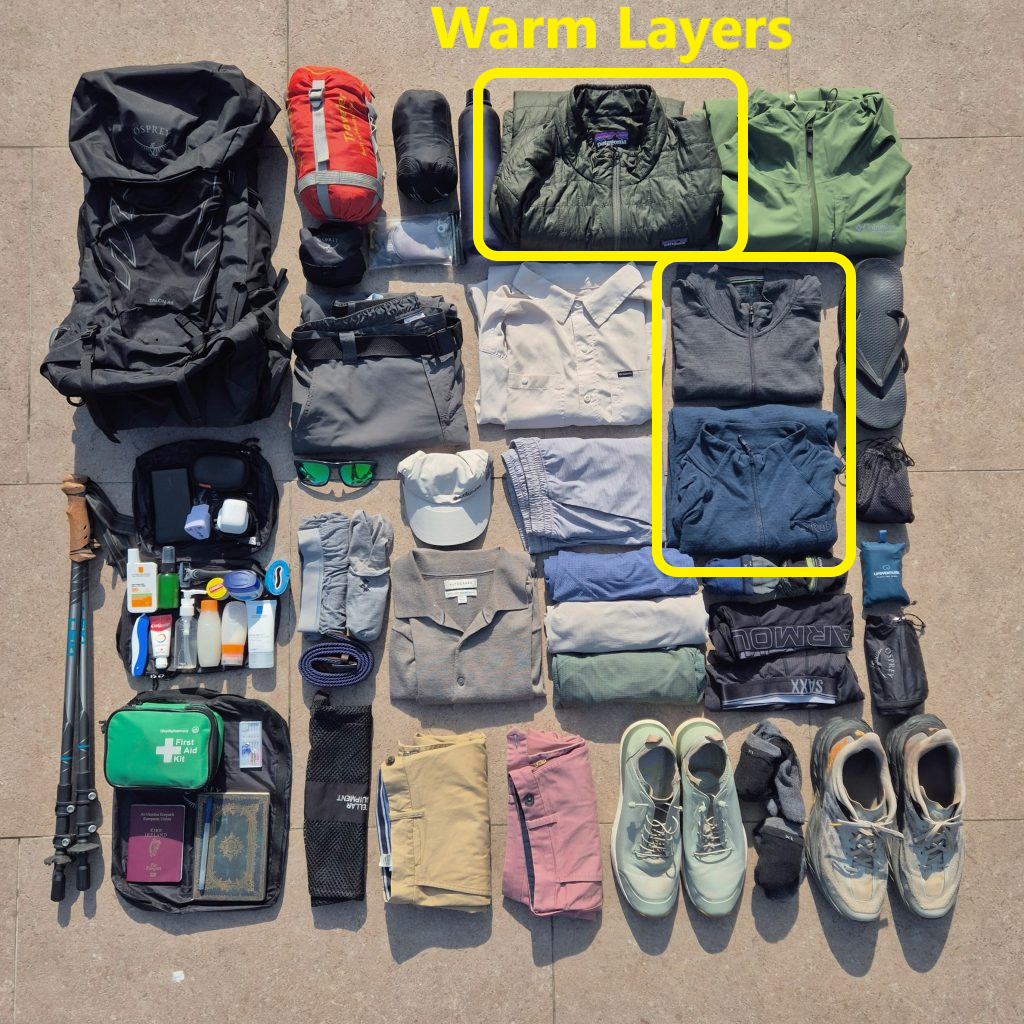
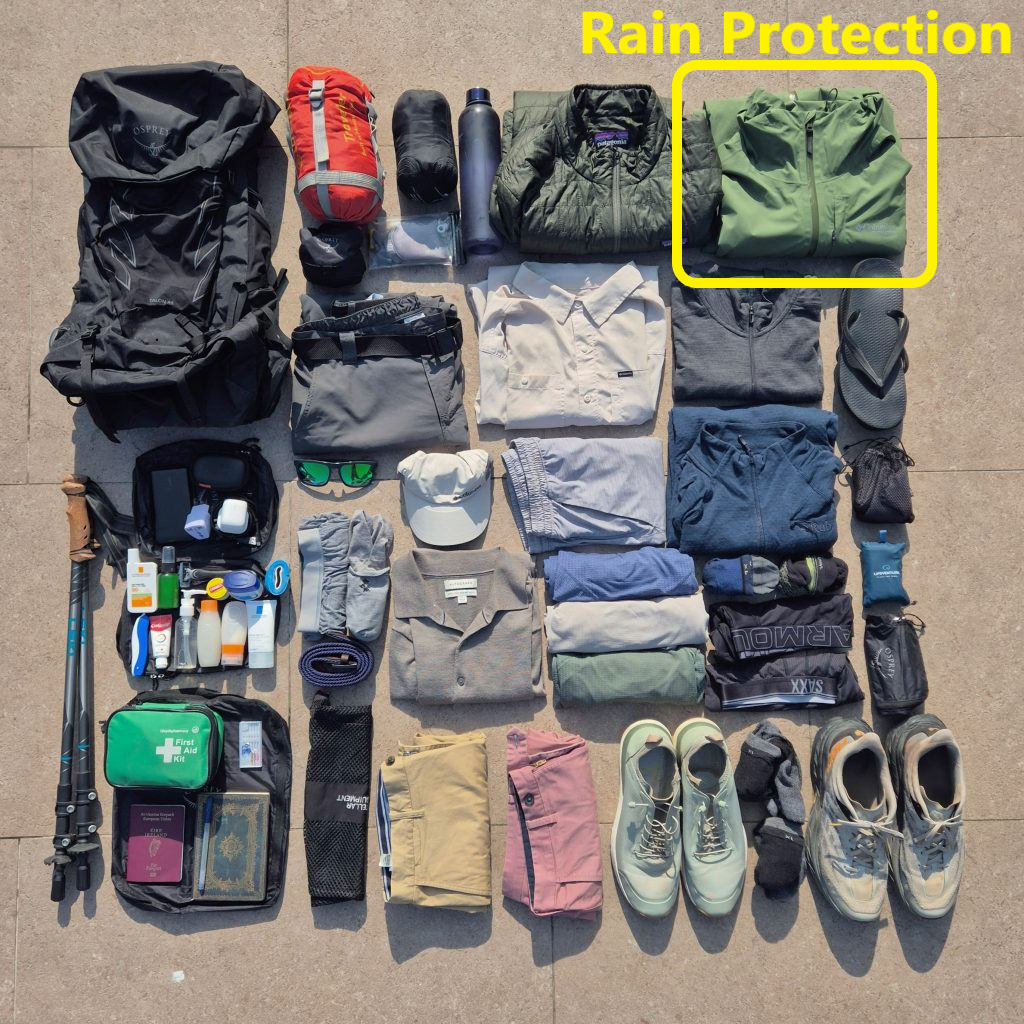
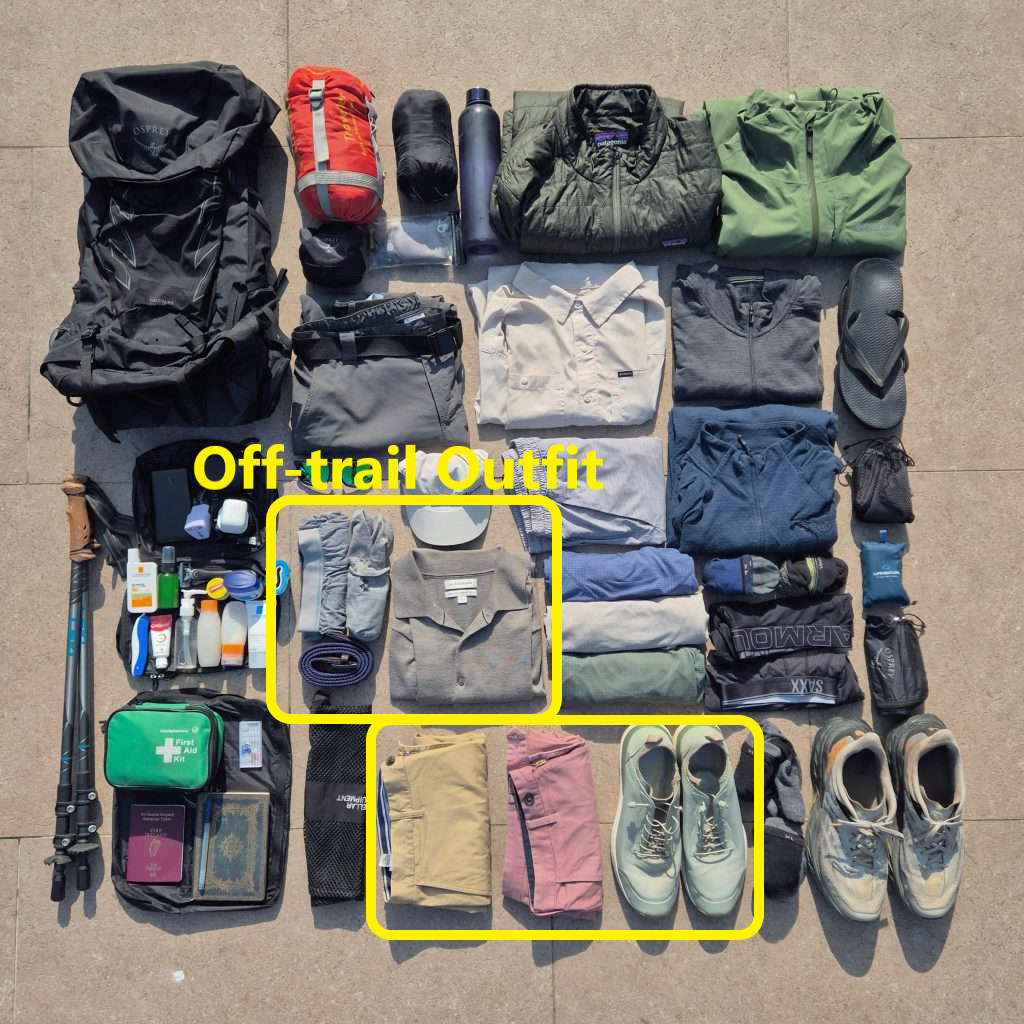
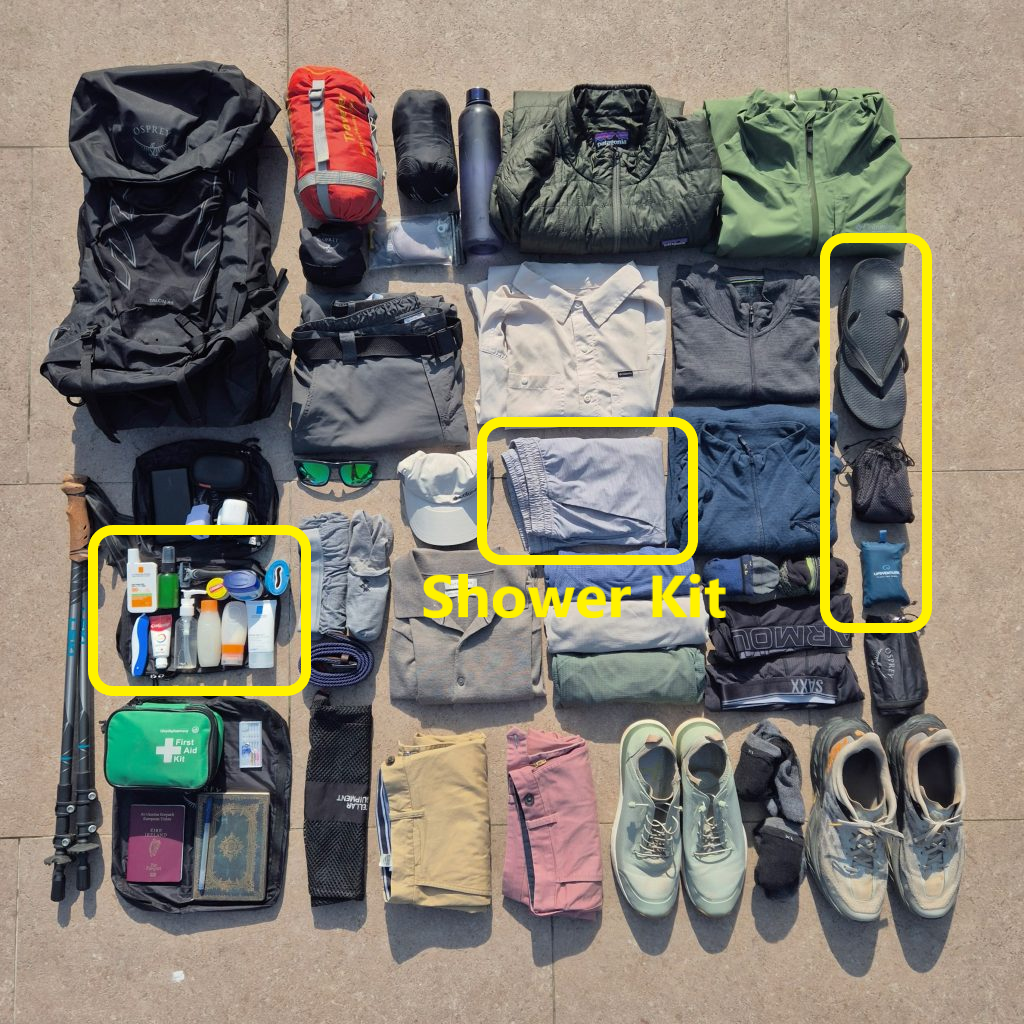
My clothing system is built around quick-drying, moisture-wicking fabrics that can be layered for comfort in changing conditions:
-
Hiking tops: 1 lightweight long-sleeve hiking shirt, 3 performance t-shirts, 1 wool base layer for cold mornings
- The long-sleeve shirt provides sun protection on exposed sections, while the wool base layer is crucial for chilly Galician mornings
-
Warm layers: 1 lightweight warm top (merino or fleece), 1 packable warm jacket for cold evenings
- Even in summer, evenings can be surprisingly cool, especially in northern Spain
-
Rain protection: 1 lightweight rain jacket
- Essential for those Galician downpours that can appear out of nowhere
-
Headwear: 1 lightweight cap with neck cover for sun protection
- The meseta sun is brutal – proper protection prevents heat exhaustion
-
Bottoms: 1 pair zip-off pants/shorts
- These convert from pants to shorts in seconds – perfect for variable conditions
-
Underwear: 3 pairs of quick-dry underwear + 1 pair for off-trail use
- Multiple pairs are necessary because laundry opportunities can be unpredictable – when you do get to wash, quick-dry fabrics are essential
-
Socks: 2 pairs wool hiking socks, 2 pairs ankle tab socks, 1 pair lighter “evening” socks
- Your feet are your most valuable asset on the Camino – treat them accordingly
-
Off-trail outfit: 1 comfortable non-hiking outfit for towns/rest days (simple pants and a casual top + shorts option)
- Having clean, non-hiking clothes for towns and rest days is a mental boost
-
Footwear: Primary trail runners for hiking + Tropicfeel Canyon shoes for after hiking
- The Tropicfeel shoes pack flat while remaining comfortable – perfect for rest days and evenings
-
Accessories: Sunglasses, flip flops, light shorts
- Flip flops, t-shirt and light shorts are perfect for getting to and from showers and doing laundry
Sleep System
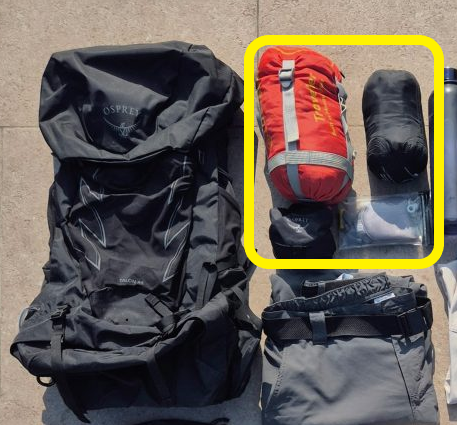
The right sleep setup ensures you’re properly rested for each day’s walk:
-
Sleeping bag: Lightweight option appropriate for your season (can be substituted with just a liner in summer)
- Weight and packed size should be primary considerations – you’re not camping in the wilderness
-
Sleep sack/liner: Adds warmth and hygiene in albergues
- Some albergues require liners, and they provide a barrier between you and communal bedding
-
Ear plugs and eye mask: Albergue essentials!
- These tiny items are worth their weight in gold when sharing a room with snoring pilgrims
Toiletries and Personal Care
Keep your toiletry kit minimal but functional:
-
Small bodywash
-
Small shampoo + conditioner
-
Travel toothbrush + small toothpaste
-
Mini deodorant (roll-on)
-
Small sunscreen for face (SPF 50+)
-
Small sunscreen for body
-
Microfiber travel towel (lightweight & fast-drying)
-
Razor (if needed, but optional)
-
Small comb or brush (for longer hair)
-
Nail clippers (small & lightweight)
-
Vaseline (prevents chafing in sensitive areas)
-
Moisturizer (for skin after long days in the elements)
Remember, most toiletries can be purchased along the way – start with the minimum and replenish as needed
A Note About Laundry on the Camino
The reality of washing clothes on the Camino is far from the daily routine some guides suggest:
-
Limited facilities: Sometimes there’s one washing machine and a couple of sinks shared among dozens or even a hundred pilgrims
-
Weather dependent: Even quick-dry fabrics need decent weather to dry
-
Machine vs. hand washing: Items washed in machines with spin cycles dry significantly faster than those hand-washed, especially wool items
-
Unpredictable access: Some albergues have no facilities at all, while others have multiple washing machines
This is where wool and anti-odor technical fabrics truly earn their place in your pack. They can be worn multiple days without becoming unbearably smelly. Sometimes you just have to wear something that’s less than fresh – it’s part of the Camino experience!
First Aid and Foot Care
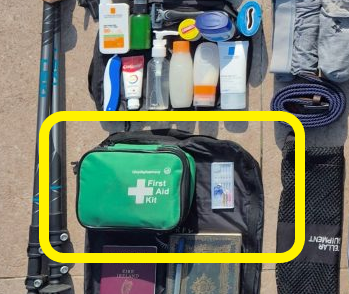
Foot care is your priority – almost all Camino injuries involve feet:
-
Blister care: Compeed and needle for popping
- Prevention is key – drain hotspots before they become full blisters
-
Pain relief: Ibuprofen/paracetamol
- For blisters, sore muscles, and inevitable aches
-
Small pack of tissues/toilet paper
- Not all albergues provide toilet paper!
-
Kinesiology tape
- Supports sore muscles and can help prevent repetitive stress injuries
Electronics and Essentials
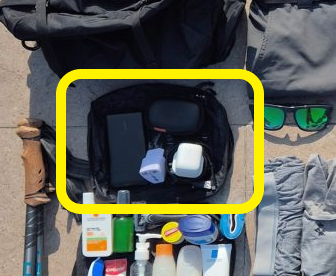
Modern pilgrims benefit from some carefully chosen technology:
-
Smartphone + charger (for maps, photos & keeping in touch)
-
Power bank (10,000-20,000mAh)
- Outlets aren’t always available or conveniently located
-
Local plug adapter (for different socket types in Spain/Portugal)
-
Charging cable (for devices)
-
Headlamp (small & lightweight for early starts in the dark)
- Essential for navigating albergues in the pre-dawn hours without disturbing others
-
Earbuds (wired or small Bluetooth, no over-ear headphones)
- For podcasts, music, or creating personal space in crowded environments
Miscellaneous Essentials
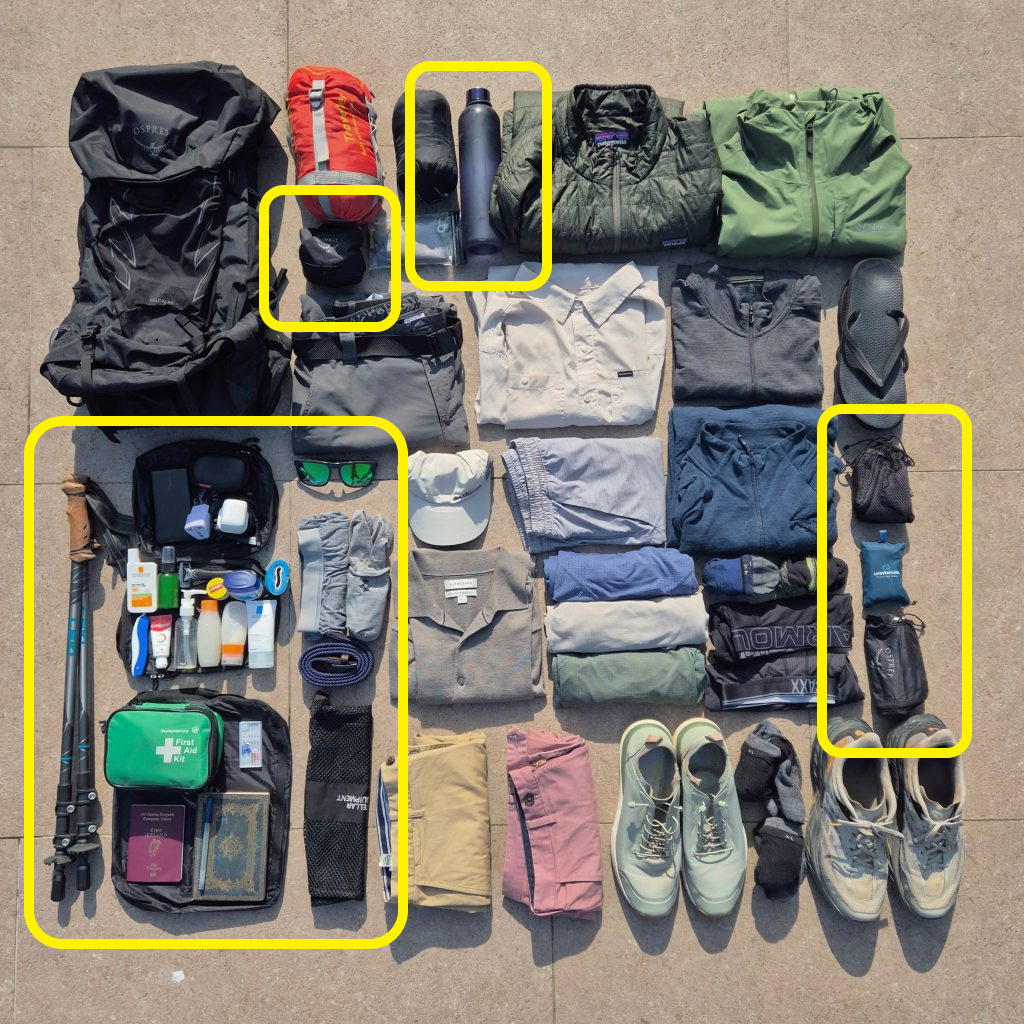
These practical items make Camino life much easier:
-
1L water bottle
- Stay hydrated but don’t overcarry water – fountains are plentiful on most routes
-
Trekking poles (strapped to outside of pack)
- Reduce impact on knees during descents and provide stability on uneven terrain
-
Rain cover for backpack
- Keeps your belongings dry when the inevitable rain appears
-
2-3 packing cubes
- Organization is crucial when living out of a backpack
-
Compression bag for sleeping bag
- Reduces volume significantly, saving valuable pack space
-
Small electronics organizer
- Keeps cables and small electronics from becoming a tangled mess
-
Ultralight packable daypack
- Invaluable for rest days or if you need to ship your main pack ahead
-
Laundry bag
- Separates dirty clothes from clean ones
-
Tiny travel detergent (for washing clothes by hand)
- Most albergues don’t provide laundry soap
-
Washing line and pegs
- Very handy for drying things – a suspended towel can also create privacy around your bunk
-
Notebook and pen
- For recording memories, contact information, and recommendations
-
Zip-lock bags (various sizes)
- Multi-purpose: protects electronics from rain, stores snacks, organizes small items
From Gear Pile to Packed Backpack
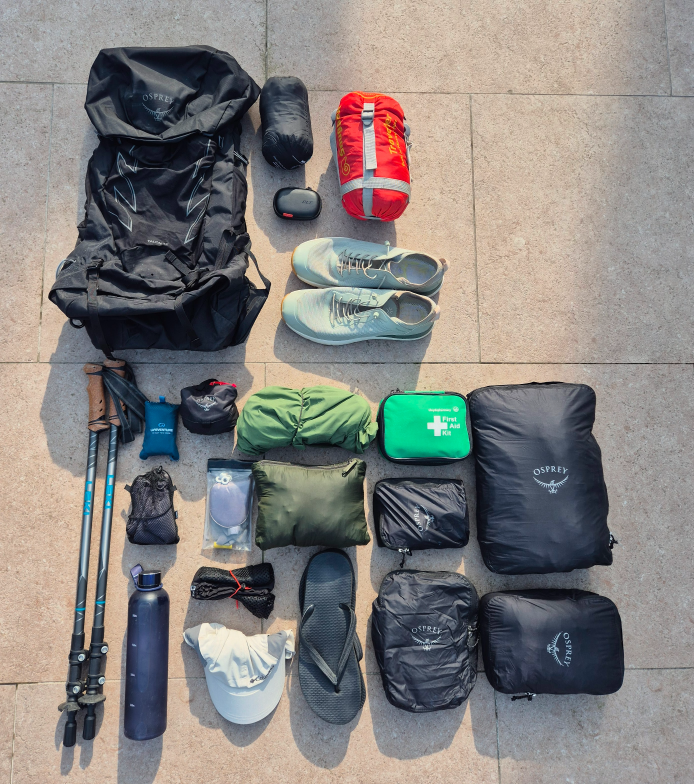
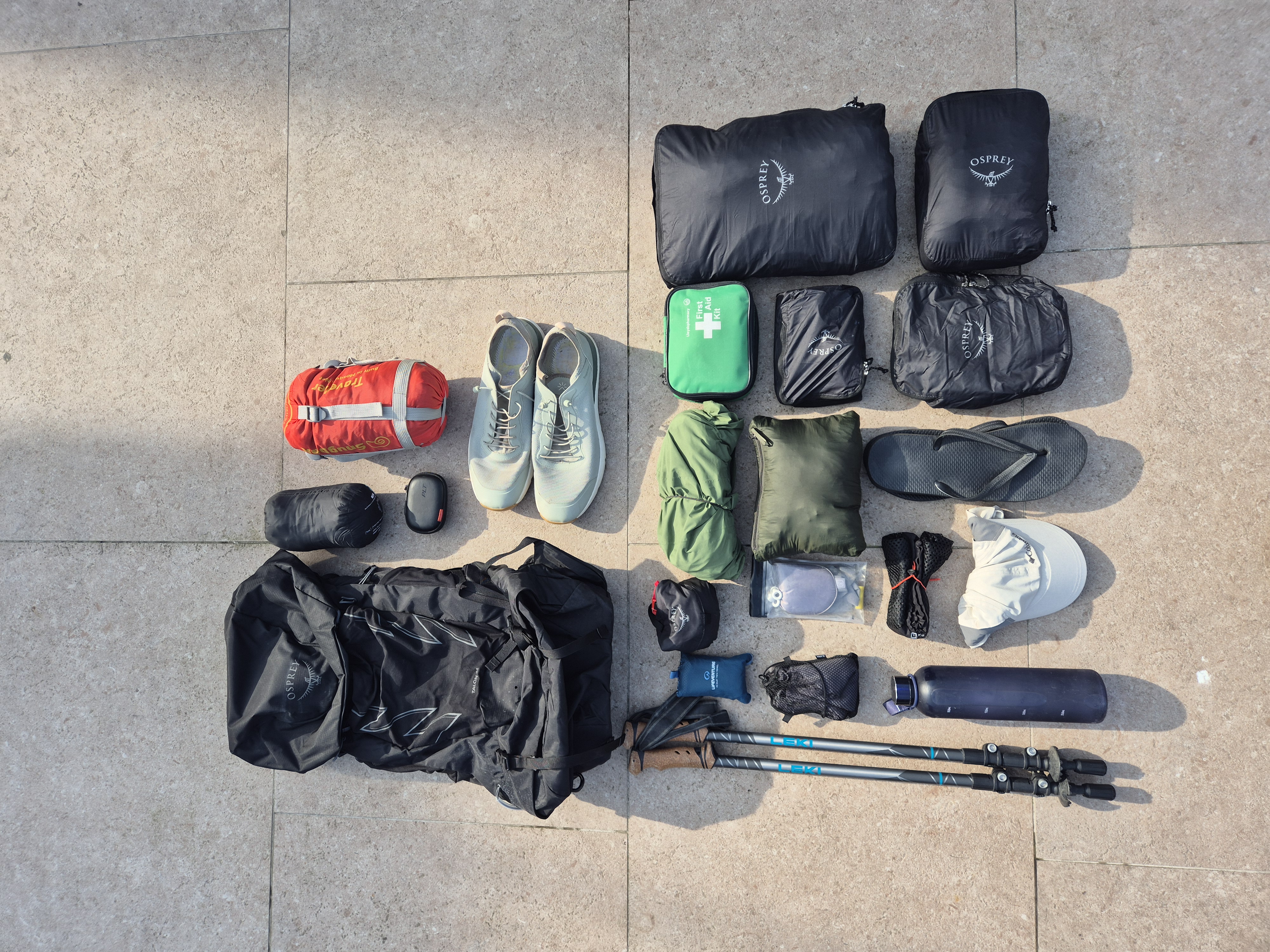
The key to efficient packing isn’t just what you bring—it’s how you organize it. Here’s how all the items above transform from a scattered pile into a neatly packed backpack:
The Organization System
Everything in my pack has a designated home, organized by:
-
Frequency of use: Items I need throughout the day (water, snacks, rain jacket) are most accessible
-
Weight distribution: Heaviest items centered and close to my back
-
Protection needs: Electronics and important documents in waterproof containers
-
Compression: Bulky items like clothing and sleeping bag compressed to minimum volume
Packing Cubes: Organization System
I use similar packing cubes to organize my gear:
-
Small Underwear Cube
-
Large Clothing Cube
-
Electronics Cube
-
Toiletries Cube
Since my cubes look similar, I identify them by feel in dark albergues—feeling the charging prongs through one fabric, recognizing my toothbrush shape in another, etc. My rain cover and daypack go in separate backpack pockets to avoid confusion.
The important thing is having a consistent system that lets you find items without disrupting others’ sleep.
This system means I can grab exactly what I need without unpacking everything, even in a dark albergue at 5:30 AM. Notice how much less space everything takes when properly compressed and organized compared to the loose items shown earlier.
Note the contradiction: The backpack shown is my larger pack—not the 30-35L I recommend. Despite containing all my gear, it still has empty space, proving a smaller pack is sufficient.
How My Pack Changes With the Seasons
The beauty of the Camino is that it can be walked year-round, but your packing needs shift with the seasons:
Summer (June-August)
-
Remove: Heavy sleeping bag (use just a liner), wool base layer, fleece mid-layer
-
Add: Extra water capacity, higher SPF sunscreen, electrolyte tablets
Spring/Fall (March-May, September-November)
-
The list above is my standard spring/fall setup
-
Consider a slightly warmer sleeping bag for early spring or late fall
Winter (December-February)
-
Add: Proper sleeping bag (0°C rated), thermal base layers, waterproof (not just water-resistant) outer layers, gloves, warm hat
-
Consider: Slightly larger pack (35-40L) to accommodate these bulkier items
Packing Tips From the Trail
After hundreds of kilometers, these strategies have proven invaluable:
-
The Rule of 3: For most clothing items, you need one to wear, one in reserve, and one that might be drying from when you last had laundry access
-
Strategic Layering: Plan your clothing as a system, not individual pieces
-
Pack by Weight: Heaviest items centered and close to your back
-
Daily Essentials Accessible: Water, snacks, sunscreen, and blister kit should be reachable without removing your pack
-
Nighttime Organization: Arrange tomorrow’s clothes and essentials before sleeping for quiet, stress-free morning departures
Testing Your Pack Before Departure
My most valuable pre-Camino advice:
-
The Fully-Loaded Test Walk: Pack everything completely and walk 10km with hills. If it feels heavy after one hour, imagine 6-8 hours daily for a month.
-
The Packing Drill: Practice packing and unpacking your bag multiple times until you can find anything in the dark
-
The Simulated Albergue: Try living out of your packed bag for a weekend at home, including sink laundry
-
The Weigh-In: Use a luggage scale to check your base weight (excluding water and food) – the ideal pack weight should be no more than 10% of your body weight, though many experienced pilgrims aim for under 8kg regardless of size
Key Lessons From My Camino
These insights might save your journey:
Less Is More Freedom
Every item you don’t carry is freedom. I’ve never met a pilgrim who wished they’d packed more, but countless who wished they’d packed less.
Quality Over Quantity
One excellent moisture-wicking shirt outperforms three cotton t-shirts.
Feet First
Your feet carry you to Santiago – prioritize their care above all else.
Trust The Way
The Camino has been walked for centuries – you’ll find what you need along the way.
Pack For The Average Day
Don’t sacrifice daily comfort for rare “what if” scenarios.
The Camino Provides
The most important item you’ll carry isn’t in your backpack – it’s your willingness to adapt. The Camino has a way of providing what you need when you need it, whether that’s a pharmacy when blisters strike or a fellow pilgrim with exactly the item you’re missing.
Some of my most meaningful Camino moments came from the unexpected generosity that filled the gaps in my packing list. The Camino isn’t just a physical journey from one place to another; it’s also about learning to let go of the security blanket of “stuff” and embracing the simplicity of having just what you need.
What’s in your pack might get you to Santiago, but what you learn to live without might be the more valuable lesson.
Buen Camino!
What’s your essential Camino item? Share in the comments below!