Camino Inglés
A short, quiet route from the Galician coast. Ferrol to Santiago through eucalyptus forests and rural villages.
Overview
The Camino Inglés is a 119 km route from the northern Galician port of Ferrol to Santiago de Compostela, typically walked in five or six stages. It’s named for the medieval English and Northern European pilgrims who sailed into Ferrol and A Coruña from the 12th century onward and walked inland to Santiago. The route has real maritime history behind it: these were the actual roads merchants and sailors used.
At 119 km from Ferrol, the route just clears the 100 km threshold required to earn the Compostela, making it one of the shortest qualifying routes. That brevity is part of the appeal. You get a complete Camino experience (the walking, the albergues, the rhythm of arriving somewhere new each day) compressed into about a week.
The “easy” difficulty rating is a little misleading. The total distance is short, but there are significant elevation changes packed into it, with several short, steep climbs, particularly in the early stages along the coast.
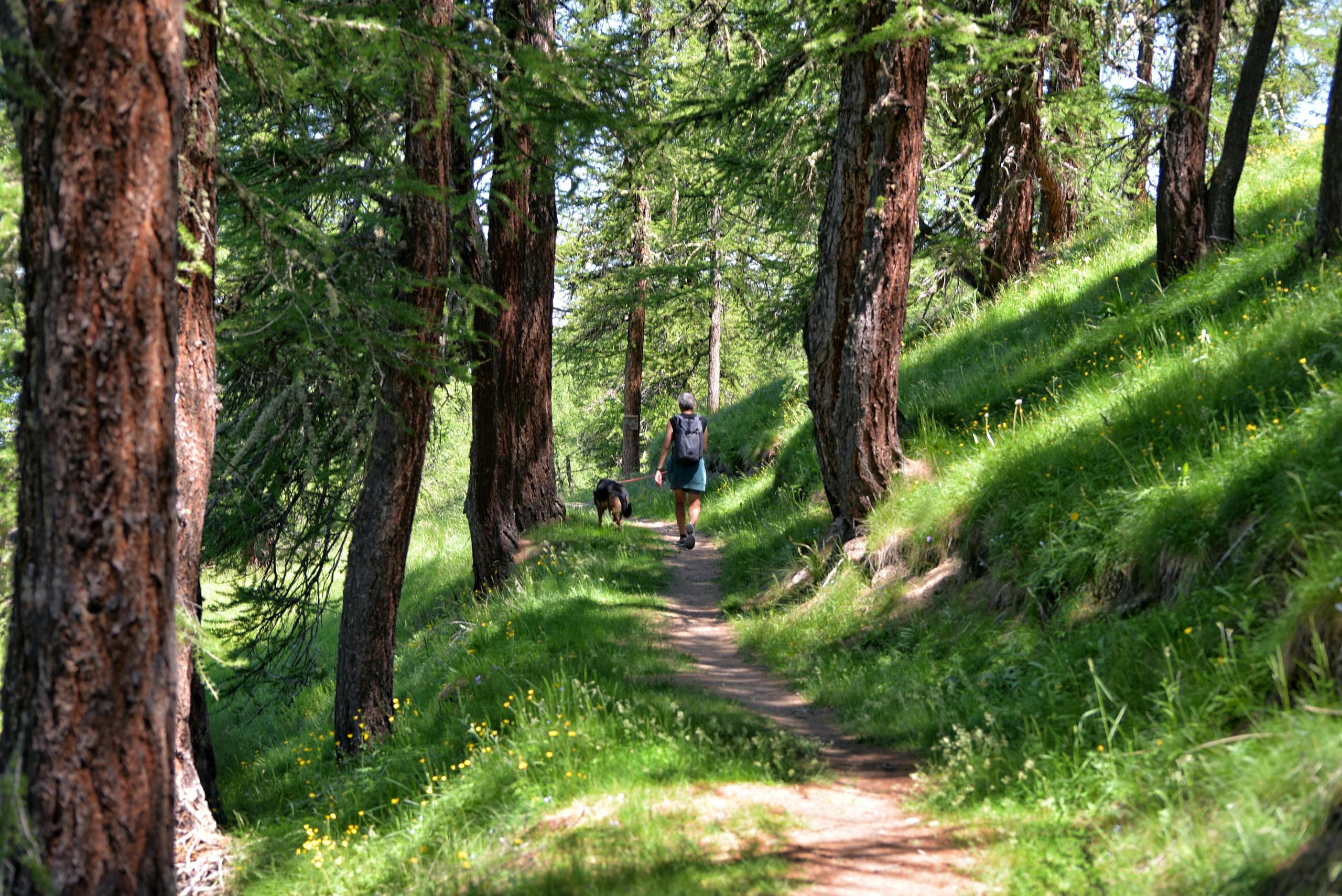
Compared to the Francés, the Inglés is quieter, less developed, and more rural. There are fewer albergues, fewer pilgrim-oriented services, and far fewer people on the trail. For pilgrims with limited time, repeat walkers wanting something different, or anyone after a more meditative walk, the Inglés is a strong choice.
I walked the Inglés in June 2024 as my third route, after the Francés and the Finisterre-Muxía.
Ferrol
Ferrol is the main starting point for the Inglés and the only one that qualifies you for the Compostela. It’s well connected to Santiago and A Coruña by bus and train, and there’s a municipal Xacobeo albergue in town along with private rooms and hotels. Pick up your pilgrim passport at the tourist office or starting albergue here.
The Camino Inglés is a far less well-trodden path, not at all like the Francés. The albergues are a mix of sanitised, concrete spaces like Ferrol, and smaller stays in rural towns. Ferrol itself is an old port city, a major northern port in Spain and heavily used by the Spanish navy. Every second building seems to be either a military installation or a shipyard. The main streets of the town are bustling with life, but there is a sense that the shipping industry in the region is declining and the local economy along with it. The main albergue in the town is somewhat spartan, with a kitchen provided, but no pots, pans, cutlery or dishware.
The Route
The Camino Inglés has two starting points: Ferrol (119 km) and A Coruña (about 75 km). The two branches meet at Hospital de Bruma, after which the route is shared into Santiago. From Ferrol, the standard itinerary is six stages.
Stage 1: Ferrol to Pontedeume (25 km)
A long first day that follows the Ría de Ferrol along the coast before turning inland to Pontedeume. The terrain is mostly flat at the start, with paved paths through the city, then a mix of road and coastal track. Pontedeume is a small medieval town on the Eume estuary, notable for its long stone bridge.
You set off in the early morning, snaking your way through graffiti covered alleyways and the main town, with only street sweepers and the odd commuter to keep you company. It is far off from the throngs of pilgrims one sees on the other routes. You snake along the coast for what seems like forever, until you come to Pontedeume, an almost 30 km start to this Camino.
Stage 2: Pontedeume to Betanzos (21 km)
This stage climbs out of Pontedeume and runs through countryside and small villages before descending into Betanzos. There are several steep sections, especially the climb after leaving Pontedeume. Watch for unleashed dogs at farmhouses along the way: the guidebooks warn about them, and the warnings are accurate.
Betanzos is a hilltop medieval town with narrow stone streets, a main plaza, and three Romanesque churches worth visiting. The municipal albergue here is small (reportedly around six beds), so it can be a real bottleneck in summer. Book ahead or have a backup plan.
Between Pontedeume and Betanzos I was entering countryside once again. The graffiti of the city was evident out here also, with massive concrete structures serving as unspoiled canvas for the region’s aspiring artists. The guidebooks warned of unleashed dogs at certain points along this route. One farmhouse contained three unleashed mastiffs, which I passed quickly, maintaining eye contact as I hoped their bark was worse than their bite, and bark they did. The only real encounter the road gave me was when it narrowed between two farmhouses and my path was blocked by a loose white mare and its trusty dog companion, who wouldn’t let me pass until another pilgrim came along and allowed me to shimmy by unscathed. Arriving in Betanzos, I crossed the bridge into the medieval town and began the steep paved climb to my bed for the night.
Stage 3: Betanzos to Hospital de Bruma (20 km)
A rural stage with significant climbing, leaving the gothic church at Betanzos and heading inland through small hamlets and farmland. Hospital de Bruma is the meeting point of the Ferrol and A Coruña branches. There’s not much there beyond the albergue and a couple of cafés, so plan accordingly.
Passing the old gothic church as I left Betanzos the next morning, I began my rural walk to Hospital de Bruma, the meeting point of the Ferrol and A Coruña routes of the Camino Inglés. Over dinner that evening, I spoke with another traveller, who had sailed from England to A Coruña aboard the old tall ships and been met by the British ambassador on arrival. I interviewed him for the site (pending write-up) and was mentioned as “the very tall Irish man” in his own piece.
Stages 4–6: Bruma to Santiago (53 km)
The final stretch is usually broken into two or three days, with common stops at Sigüeiro before the final push into Santiago. The terrain is rolling, with a mix of forest tracks and quiet roads through eucalyptus and pine. The arrival into Santiago follows the standard Camino entry past Monte do Gozo and into the old town to the Cathedral.
I made one more stop before the end, but after six weeks on the road, one day blending into the next, arriving in Santiago for the third time in as many weeks felt like finality rather than victory. My journey of a thousand kilometres had come to an end (the day before, technically). I got my final Compostela amid a torrential downpour, and was on the bus to Porto that very same day.
The Compostela Question
This matters, so it’s worth being direct about it. Starting from Ferrol (119 km) qualifies you for the Compostela. Starting from A Coruña (about 75 km) does not. A Coruña falls short of the 100 km minimum.
You can only earn the Compostela from A Coruña if you live there, or if you’ve walked an additional qualifying leg beforehand. The Celtic Camino, for example, is designed for UK and Irish pilgrims to make up the difference by walking a qualifying section at home before flying out.
If the certificate matters to you, start in Ferrol. If you have limited time and don’t care about the paperwork, A Coruña is a valid starting point. Just know the rules going in.
Getting to Ferrol
From Santiago: The easiest option. Monbús runs multiple daily buses; the journey takes about 90 minutes and costs roughly €6–10.
From A Coruña: Local bus (Arriva) or train to Ferrol, about 30 minutes. Straightforward if you’re flying into A Coruña.
From Madrid: There’s an overnight TrenHotel (around 12 hours) and day trains (7–9 hours). Alsa buses take approximately 8.5 hours. Most pilgrims fly to Santiago or A Coruña and take the bus north, which is simpler.
Best Time to Walk
Galicia is green year-round because it rains year-round. That’s the deal. If you’re prepared for damp weather, you can walk the Inglés in any season.
May, June, and September are the sweet spot. Temperatures are mild (roughly 15–20°C), rainfall is lower than average (June sees roughly five days of rain on average), and crowds are light.
July and August are surprisingly pleasant on this northern coastal route. Unlike inland Spain, it rarely gets oppressively hot, but accommodation fills faster.
Winter (November–February) is wet, windy, and fog-prone. The route is quieter still, but some services thin out.
Always carry a rain jacket. The weather can shift within hours.
Who Should Walk This Route?
Pilgrims with limited time. You can walk it in 4–6 days depending on your pace. The Francés demands five weeks; the Inglés demands one.
Repeat pilgrims. If you’ve already walked the popular routes, the Inglés offers something different: more wooded, more coastal influence, less tourist infrastructure, far fewer crowds.
Anyone wanting a quieter Camino. You won’t get the crowded albergue dinners or the festival atmosphere of the Francés in high season. The towns are genuine and the walking is meditative.
People interested in maritime history. This is where traders and pilgrims actually arrived by sea for centuries.
Practical Details
Daily cost: Budget €40–60 per day including lodging, meals, and the occasional splurge. Transport to Ferrol from Santiago is about €8 by bus.
Accommodation: Fewer albergues than the Francés. This is the biggest practical difference. Public Xacobeo hostels exist in Ferrol, Pontedeume, Betanzos, and Sigüeiro. Private rooms and hotels fill the gap elsewhere. Budget €12–20 for an albergue bed, €30–60 for a private room. Book ahead in summer.
Terrain: A mix of rural paths, forest tracks, and some road walking. Generally well-marked from Ferrol, though some pilgrims report the A Coruña variant is less clearly signed.
Services: Towns along the route have cafés, small markets, and pharmacies, but don’t expect the service density of the Francés. Plan your meal stops. You can’t always count on finding a restaurant exactly when you want one.
Credential: Pick up your pilgrim passport at the tourist office or starting albergue in Ferrol. Collect stamps daily, and present it at the Pilgrim’s Office in Santiago to receive your Compostela.
After the Inglés
There’s something about endings that feels out of sorts. Arriving in Porto, after taking this great journey, a feeling of exhaustion which cannot be characterised by mere tiredness, but instead leaves a feeling of restlessness and withdrawal. My great journey had ended.