Hontanas is one of those villages that seems to appear out of nowhere on the Camino. Tucked into a natural depression in the Castilian Meseta, its red-tiled roofs and light stone buildings huddle together against the open plains. The town is small but lively, with narrow cobblestone streets winding around a central church and its striking bell tower. A welcome stop along the Camino, it offers pilgrims a brief reprieve from the Meseta—a hot, flat, 200-kilometer stretch notorious for its unrelenting heat, scarce water, and lack of shade, taking over a week to cross.
I arrived in Hontanas in the early afternoon, grateful to be off my feet after the long walk. The private albergue I chose, located above a bar, was both cozy and practical, with sturdy wooden bunk beds that seemed built to last a century of pilgrims. Seeking some recovery for my still-adjusting body, I indulged in a swim and sauna at the town’s small but inviting pool. Tucked slightly out of the way, it wasn’t a popular stop for budget-conscious pilgrims, but the warmth and relaxation were exactly what I needed to recharge.
Later in the day, the village hosted a procession, and nearly everyone joined in—locals and pilgrims alike. A large cross led the way as the priest, dressed in ceremonial vestments, blessed the surrounding farms. The crowd moved slowly, the air filled with a mix of reverence and community spirit. The procession wound its way back to the church, concluding just in time for evening mass. Unfortunately, the timing overlapped with the pilgrim meal at the municipal albergue, meaning some of us, myself included, arrived late.
When I entered the dining room, the meal was already underway. I was ushered to the last available table, where three other stragglers—Jonatán from Slovakia, Ivar from Norway, and Martin from Germany—were seated. We quickly struck up a conversation, bonded by our shared late arrival. The wine that came with the meal disappeared quickly, prompting a search for more, and another table generously shared theirs with us. It didn’t last long either. Over the course of the meal, our initial small talk evolved into a lively conversation, and we left as fast friends.
Jonatán stood out for his quiet, reflective nature. While many pilgrims, myself included, sought comfort in the recreational aspects of the journey, Jonatán leaned heavily into its spiritual side. He spoke of how the Camino brought him closer to God, and his evenings often included attending vespers services in towns where they were held. In Hontanas, he joined the procession and the mass, embracing the town’s traditions and the deeper meaning they carried.
Jonatán and I crossed paths several more times on the road, often arriving in the same towns by evening. He had joined a group with Caecilia, a fellow pilgrim, and two other American girls walking a bare-budget Camino. The two girls relied almost entirely on complimentary bread at albergues, an amusing but stark reminder of the different ways people approach the journey.
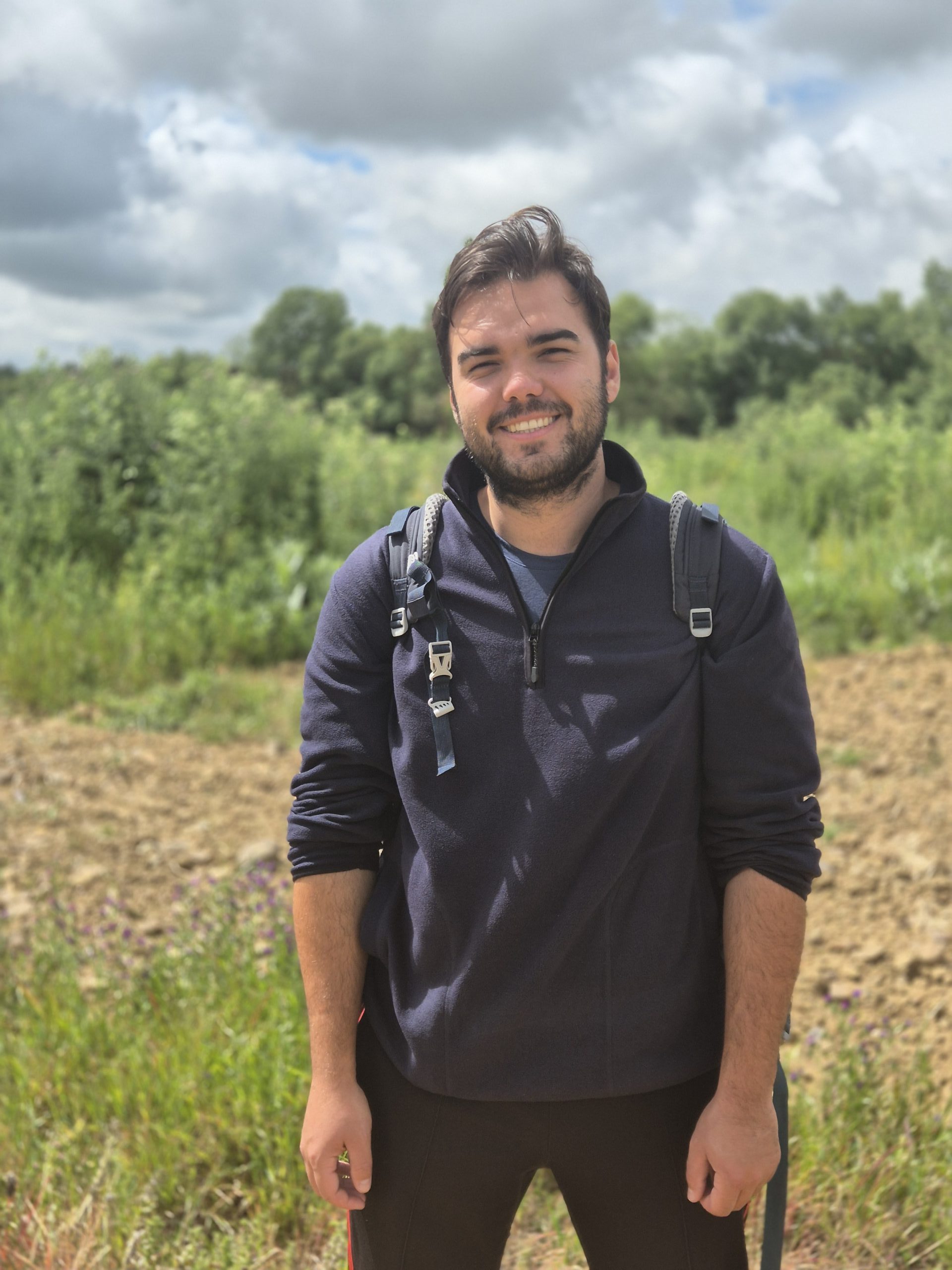
The interview with Jonatán was conducted while we were walking to Terradillos de los Templarios. I was limping due to the onset of an injury, and the irregular way I moved while trying to use my recording device certainly did my tendinitis no favors. This was also the same day I interviewed Caecilia.
What motivated you to embark on the Camino de Santiago?
I’ve always loved nature; I’ve always felt alive in it. Nowadays, people surround themselves with technology all the time, but I feel much more alive and closer to God in nature. That’s what motivated me the most: to spend some time alone and with God.
Can you share a particularly memorable moment from your journey so far?
The most memorable moment was in Santo Domingo, where we stayed at a donativo. We made dinner together, sang multiple songs, and an older Spanish gentleman spoke to us about the Camino—about the spirit of it and what you need to do to fully experience it. Afterward, we went upstairs to a small chapel where we prayed. Each pilgrim read a prayer in their own native language. It was really emotional and touching.
We also spent a minute or two in silence, just thinking or praying. That was probably the most memorable moment for me. But I could name others, like yesterday at another albergue where they were singing. It was beautiful.
What has been the biggest challenge you’ve faced on this journey, and how did you overcome it?
The physical part, for sure. For example, today I feel tired—my knees hurt, my feet hurt—but I just push through it. Maybe that’s part of the Camino: you suffer a little, and it clears your mind because you can’t think about much else except the pain.
Some days are good, and some are bad. I haven’t taken a rest day yet, and it’s been 17 days, so I probably need one. But you just keep going—when you’re at 15 kilometers and still have 10 or 12 to go, you have to push through.
At the start, my stamina wasn’t great, but my body wasn’t as sore. Now, I feel stronger, but my body is worn down. My feet hurt when I wake up, my shoulders are sore immediately, and I feel it all over. It’s a mix of improvement and fatigue.
Can you share any Camino wisdom?
Yesterday, I saw a quote on the side of the road: “Even if you pick all the flowers, you can’t stop the spring.” That stuck with me.
Another piece of wisdom came from the Spanish gentleman at the donativo. He said it’s really important to finish in Santiago. Even if you can’t do it this year, come back and finish it. I’ve been thinking about that because I didn’t think it was essential, but now I feel like maybe it is. Every journey has a finish point, and for this one, it’s Santiago.
What is one thing you’ve learned about yourself while walking the Camino?
I’ve learned a lot about my body. When you live a comfortable life, you don’t really feel hunger or pain, but here you feel both. You realize you have to take care of your body—rest, eat, and prepare for the next day.
I’ve also learned about mental toughness. Even when you’re suffering, you just keep pushing, and eventually, you’ll get there.
How do you think this experience will influence your life after the Camino?
I’ve already met so many people from different cultures, beliefs, and backgrounds. I think I’ve learned a lot about the world, and that will stick with me, at least for a while.
I hope I’ll spend less time on unimportant or trivial things and more on what truly matters. I also hope my faith and relationship with God will be stronger, and that I’ll know myself better.
What part of the day on the Camino do you find most challenging or rewarding?
The mornings are the most rewarding. I feel fresh—or at least fresher—and it’s usually a quiet time for prayer and listening to nature.
The afternoons are also rewarding because I spend time talking and eating with friends I’ve met along the way.
The most challenging part is the middle of the day, when you’ve already walked a lot but still have 10 kilometers or so to go. That’s when it gets tough.
Have you discovered any new beliefs or changed any old ones during your walk?
No, not yet.
Is there someone you’ve met on the trail who has impacted your journey? Can you tell me about them?
Yes, definitely. Caecilia, who you’ll probably talk to later. I met her about 10 days ago, near the top of a hill after Pamplona, and we started talking.
We’ve walked together every day since—this is our eighth stage in a row. We’ve talked about everything: surface-level things, deeper family matters, our beliefs. She’s been great company and has really impacted my journey.
What is the most essential item you’ve carried with you, and why is it so important?
My journal. I decided to write every day during the Camino. My cousin encouraged me to do it before I left, saying it would be something great to look back on.
I’d also say my Bible and maybe one or two books, along with my boots—they’re essential for obvious reasons.